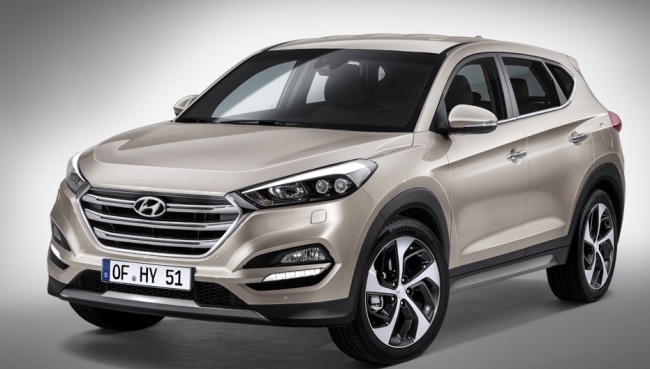
Tuesday, July 12, 2016

Rules of the road: seven summer road trip tips

Cheap gas got you itching for the open road? Step on the brakes! There are a few things you need to do before you hit the open road this summer. Follow these tips to arrive at your final destination safely. 
1. Maintenance tune-up

Before any road trip, the National Highway Traffic Safety Administration (NHTSA) recommends that you have your car's tires, battery, belts, fluids and air conditioning system checked by a qualified, certified mechanic. The vehicle needs to be serviced according to the manufacturer's recommendations, and it should be in ready-to-travel condition.

According to Kevin Schechterle, service director at Gary Rome Hyundai, the tires should be the first things you check before hitting the road. "Based on summer heat, you want them to be inflated properly," he said. "The heat created by the friction between the road and the tire while driving in summer weather may cause your tires to become over-inflated and pop."

 2. Maximize fuel efficiency

You can extend the value of each dollar you pay at the fuel pump by practicing a few fuel-efficient driving techniques. Avoid jackrabbit driving, or aggressive starts and stops, because a heavy foot on the gas and brake pedals not only uses more gas but also causes more wear and tear on your vehicle. Secondly, slow down. While each type of vehicle is different, fuel efficiency drops off sharply after about 50 miles per hour. The US Department of Energy estimates that, for every five miles per hour you drive over 50, it's like paying 14 extra cents per gallon. Besides, driving slower avoids speeding tickets.

Enabling cruise control may save fuel and make a drive more relaxing, but Schechterle cautions against using cruise control. "Even though cruise control might save on fuel, driving using the throttle keeps the driver more engaged and alert."

3. Gear up with safety gear

Make sure your car is equipped with a properly inflated spare tire with a jack and tools, jumper cables, reflective items and a stocked medical kit. "Most people do not have medical kits in their cars, but it is always a good idea to be prepared for an emergency," said Schechterle.

4. Prepare yourself for the long haul

There is a lot to pack the day before your trip. Make sure you pack essential items, like a cooler full of snacks and drinks, especially when traveling with children. It'll help you avoid making unnecessary stops throughout your travels.

5. Remember to fuel yourself

Drivers also need a good night's sleep to stay alert during the trip. "Don't drive when you're tired," added Schechterle, "and you don't need to rush to your destination."

6. Save your selfies and keep your eyes on the road

More than a quarter of all car accidents in the United States are caused by cell phone use, according to a study by the National Safety Council. Your friends and family care more about you getting safely to your destination than a selfie behind the wheel.

7. Enjoy the moment

Vacation getaways can be few and far between. Make the most of your time.

"You can make the road trip a fun part of your vacation if you stop to take breaks and take in the sights along the way," said Schechterle.

Monday, July 11, 2016

2017 Hyundai Santa Cruz: Ridgeline Rival, Missing

At the start of last year, Hyundai showcased an intriguing Santa Cruz pickup concept during the 2015 Detroit Auto Show. After lots of speculation regarding the possibility of the vehicle materializing as a production model, some execs in Hyundai eventually confirmed that it is set to happen.
The only impediment, they said, was the decision from the top brass to green light an official reveal. Everything had been set and it was just a matter of scheduling its public appearance.
At this point, the Honda Ridgeline which it’s supposed to compete with has already rolled out to dealerships, and there’s still no word on the Santa Cruz. It has virtually vanished from everyone’s minds, lips, and fingertips.

The last we heard from Hyundai about the ute, it’s actually not aimed at the Ridgeline. The Santa Cruz won’t have up to 5,000lbs of towing capacity and is not going to offer as much utility as its Honda counterpart.
Instead, it would be contending against the likes of the Honda HR-V and Mazda CX-3, sort of as a diminutive crossover with a tiny bed. The same could be said about the Ridgeline and Pilot three-row SUV, but in the case of the Santa Cruz, its place is in the subcompact segment.

Friday, July 08, 2016

New Hyundai i30 to be unveiled at Paris Motor Show 2016

Ahead of its global launch, the new Hyundai i30 will be officially unveiled at the upcoming Paris Motor Show 2016. Reports indicate that the new i30 will be offered in three body styles – a five-door hatchback, an estate and a four-door coupe, which are mainly targeted at the European market. It is to be seen if the company will take-out the three-door body styled variant from the market due to its poor sales figures.


In the US and Canada markets, Hyundai sells the i30 as the Elantra GT. Hyundai might introduce a performance variant that will be rechristened as the Hyundai i30 N. It will be powered by a 2.0-litre turbocharged four-cylinder petrol engine that will use the technology from the Hyundai i20 WRC. The performance oriented variant will be offered as a range-topping model. The interior in the new i20 will also offer fresh upgrades.
Back at the Auto Expo earlier this year, Hyundai had showcased the current generation i30 hatchback. However, the company has no plans to introduce the i30 hatchback in India. Sometime later this year, Hyundai plans on launching the Tucson and the new Elantra in India. More details about the new Hyundai i30 will be known post its official unveiling.

Thursday, July 07, 2016

Hyundai Hope On Wheels Awards Impact Grants Totaling $900,000 For Pediatric Cancer Research

FOUNTAIN VALLEY, Calif., July 6, 2016 /PRNewswire/ -- Hyundai Hope On Wheels® (HHOW) and Hyundai dealers will award 18 hospitals with a $50,000 Hyundai Impact Grant for pediatric cancer research to help end childhood cancer. The Impact Grant supports the programmatic needs of pediatric oncology. The grant may also be used to support direct patient assistance programs, such as enrichment programs, play room/teen center equipment, family on-site support, educational initiatives, or other efforts to improve care and cure for kids fighting cancer.
View photo
.
Hyundai Hope On Wheels(R) Logo. (PRNewsFoto/Hyundai Hope On Wheels)
In addition to the Impact Grant winner, Hope On Wheels will soon announce the winners of its Hyundai Scholar and Young Investigator Grants. This year alone, HHOW will award more than $13 million in new pediatric cancer grants. Since 1998, the program has funded $115 million in research to Children's Oncology Group (COG) member institutions nationwide. The program also creates awareness about the importance of the disease, which is the leading cause of death by disease in children in the United States.
The Impact Grant will be presented during handprint ceremonies that will take place at each awarded hospital between July – August. During the ceremony, HHOW will commemorate local-area children affected by cancer. The kids will be invited to place their handprints on a white 2016 Hyundai Tucson to commemorate their fight against the disease.
Attendees at the various ceremonies will include HHOW's two national youth ambassadors and pediatric cancer survivors, Hannah Adams and Ryan Darby, who will deliver a message of hope to children's cancer hospitals. Hannah was five years old when she was diagnosed with a Stage 3 Wilms tumor that enveloped her kidney. Since her recovery, she has pursued her love of dancing and singing to help uplift and encourage other children and families through their fight. Twelve-year-old Ryan was diagnosed with Acute Lymphoblastic Leukemia six years ago, and since his recovery, he has shared his story and words of encouragement with children and families across the country. Watch Hannah and Ryan's story at www.HyundaiHopeOnWheels.org
"Our mission at Hyundai Hope On Wheels is clear: End Childhood Cancer," said Scott Stark, Chairman, Hyundai Hope On Wheels Board of Directors. "By funding transformational research through our Impact Grants and celebrating the lives of the brave young cancer fighters at our handprint ceremonies, we move closer to our dream of a day without cancer. This is a fight you can count on us to be in until no child ever has to hear the words: you have cancer."

Wednesday, July 06, 2016

Hyundai Motor to operate self-driving taxis at research center

[THE INVESTOR] Hyundai Motor Group plans to operate self-driving taxis at its research center in Namyang, Gyeonggi Province, from later this month, a local newspaper reported on July 6. 

MoneyToday, citing unnamed company officials, reported that a total of five autonomous taxis, based on Hyundai’s fuel-cell sport utility vehicle Tucson ix and the Ioniq hybrid compact, will be operated. 


Hyundai’s Genesis sedans drive on autopilot mode at the carmaker’s Nevada research center. / Hyundai Motor

The Namyang center is located on a 346.5 square-meter site, equipped with a 64-kilometer test-driving road. 

The taxis will be operated for employees commuting within the campus. Users can make a ride reservation via a smartphone app. 

A group of Uber researchers visited the center last month possibly to seek partnership with Hyundai that has been making a big push on autonomous driving. 

Late last year, the group acquired driving licenses in Nevada, US, to operate its self-driving cars based on Hyundai’s fuel-cell SUV Tucson and Kia’s full-electric compact Soul. 

Early this year, the carmaker was granted approval to operate autonomous models of its Genesis luxury sedan and the Tucson fuel-cell SUV in Korea. 

Hyundai also plans to unveil a self-driving version of its latest electric model Ioniq during the Consumer Electronic Show in Las Vegas next year. 


Source

Tuesday, July 05, 2016

Test Drive: Popular Elantra is efficient, well-equipped

In its early days, people gravitated to the compact Hyundai Elantra sedan because it was inexpensive, acceptably reliable and durable, and well equipped even at the base level. Cheaper than the popular Honda Civic and Toyota Corolla, it couldn’t match the leaders in any major performance or fuel-economy category, but the low price was alluring.
Today, the attraction is far more deep and broad. Nearly a quarter million Americans buy one every year, and there hardly can be any doubt that many simply like the Elantra better than the alternatives.
In addition to keeping the price down – $17,150 in base SE trim – Hyundai has improved the car’s look, ride and fuel economy.
The version we tested was the fuel-economy-focused 2017 Elantra Eco, rated at 32 mpg city, 40 highway. We did a little better than 40 in straight highway driving in western and central Connecticut. Fact is, we had the Elantra for a week, using it for commuting and local trips, and barely nudged the gasoline gauge to the left of the three-quarter mark.
auto-elantra INT 6-30Our Eco had a sticker price of $21,610 with almost no optional equipment. But the standard-equipment list included features often excluded or even unavailable on inexpensive econoboxes: blind-spot warning, rear-view camera, alloy wheels, 7-inch touchscreen, satellite radio, heated front seats and push-button start.
Hyundai boasts that it offers a number of high-tech features on the Elantra that can’t be added to competing models: automatic emergency braking, headlights that turn with the front wheels, hands-free trunk opener, smart cruise control, heated rear seats and more.
We’ve viewed with some skepticism the emergence of emergency tire puncture repair kits in place of spare tires. Our Elantra had both – a “doughnut” spare tire and a repair kit.
Relatively long at 15 feet, the Elantra doesn’t quality as an urban runabout, but it makes up for this deficiency by comporting itself admirably in highway and rural driving. It’s smoother, quieter and more composed than any previous Elantra.
The front bucket seats are comfortable, and controls are easy to decipher. Despite the car’s length, knee room and headroom in back are tight for tall passengers.
Our biggest complaint was the way the engine and transmission brought the car from a dead stop to traffic speeds. Seemingly, that’s the price paid for the Eco’s exceptional fuel economy. The car seems to have plenty of power, but response is inconsistent. We’ve never been fans of the dual-clutch automated gearbox, and the Elantra, so equipped, didn’t bring us around to this technology. Other Elantra models provide a choice between a 6-speed stick shift and 6-speed conventional automatic; either would deliver more consistent acceleration than the 7-speed.
Data on safety and reliability aren’t available on this redesigned model. The 2016 Elantra’s reliability was above average, according to U.S. News & World Report. The Insurance Institute for Highway Safety gave the 2016 Elantra its top “Good” rating in all categories except small-overlap-front crash (“Acceptable”).

Friday, July 01, 2016

2017 Kia Forte vs Hyundai Elantra

If you’re a fan of Korean cars, then two decent compact nameplates have updated for 2017. They’re not that different in terms of pricing so other aspects take center stage in the dilemma between the Kia Forte ($16,500) and Hyundai Elantra ($17,150).

Powering the Forte is a 2.0L Atkinson-cycle engine that takes over from the 1.8L four-cylinder block in the 2016 model. But has power or fuel economy improved? Well, not really.
Output remains pretty much unchanged at 147hp and 132lb-ft torque. The engine is mated to either a six-speed manual gearbox or a new six-speed auto that’s more efficient. Fuel economy remains unchanged at 32mpg combined.
Guess what – the new Hyundai Elantra uses the exact same 2.0L engine as the Forte, throwing out the same 1.8L unit that it previously shared with the Forte as well.
2017 Hyundai Elantra
Yes, the two six-speed transmissions (auto is the optional one) are also shared between both vehicles. As such, output and fuel economy are equal on the Forte and Elantra. If you want something different, go for the Elantra Eco which uses a 1.4L turbo-four worth 128hp, 156lb-ft torque, and 35mpg combined.
So the only thing separating these two are looks. It is quite obvious that the Elantra is superior in this department, with a design language that sits closer to the Genesis premium brand.
That’s why it’s more expensive, though we have to admit that the restyled bumper, reshaped headlights, and reworked tiger nose grille makes the Forte much more attractive than before.

Thursday, June 30, 2016

9 Cool Facts About Hyundai's Manufacturing Plant in Alabama

Hyundai has come a long way in the U.S., and its manufacturing plant in Montgomery, Alabama, has helped fuel the automaker’s success. On a recent trip to the South, we got the chance to tour that facility. Here are nine cool facts about Hyundai Motor Manufacturing Alabama (HMMA).

Hyundai Motor Manufacturing Alabama assembly robots

Hyundai uses more than 400 robots throughout the plant to assemble the Sonata and Elantra sedans. These robots weld and paint and precisely place windshields. Although two different cars are built at the plant, they’re both built on one assembly line for efficiency’s sake, something that’s made possible by robots and human team members working in harmony. The Santa Fe crossover was added to the line on June 22.

Hyundai Motor Manufacturing Alabama OneKit robot

Not all of Hyundai’s robots require arms to so their job. The OneKit system employs a number of autonomous drones to transport parts across the assembly line. The wheeled automatons drive along a set path and can stop when a person or object is detected in front of it. After the object moves, the robot continues on its way. The Alabama plant is one of only two in the world to use these robots.

Hyundai Motor Manufacturing Alabama Elantras at test track

HMMA prides itself on its build quality. The plant’s target for quality control is more than 97 percent perfect off the line.

Hyundai Motor Manufacturing Alabama fitness center

The factory is huge. Its buildings cover 3.2 million square feet and sit on a 1,700-acre property. Located on the grounds are two cafeterias, a fitness center, and a Wells Fargo branch.

Hyundai Motor Manufacturing Alabama workers

That amount of real estate needs a lot of workers to run. HMMA employs 3,000 full-time team members and 500-600 temp workers, who fill in for workers on sick leave or vacation.

Hyundai Motor Manufacturing Alabama Elantra on assembly line

Full-time jobs at the Hyundai plant are highly sought after, and for good reason. Full-time team members make on average between $67,000 and $70,000 a year. Maintenance personnel average $100,000 a year.

Hyundai Motor Manufacturing Alabama Sonata rolling off line

The plant has an annual production capacity of 395,000 cars. The line can spit out 75 units per hour, with an average output of 1,550 cars per day Monday through Friday. HMMA runs some Saturdays based on demand but has a policy of operating no more than two Saturdays a month.

Hyundai Motor Manufacturing Alabama exterior view of plant

When suppliers are factored in, HMMA’s overall economic impact is $4.8 billion for the state of AlabamaHyundai says the plant is responsible for creating 38,000 direct and indirect jobs and represents 20 percent of Montgomery County’s gross domestic product.

Hyundai-Super-Bowl-Ad-All-For-One

Team members from HMMA were featured in a 2012 Super Bowl commercial. Because the ad required singing the theme song from “Rocky,” auditions were held throughout the plant to choose the hundreds of workers featured in the big game TV spot.

Hyundai Tucson small SUV earns top crash rating

The Hyundai Tucson SUV is the only vehicle in the small SUV category to receive good ratings for both driver and passenger in the latest Insurance Institute for Highway Safety (IIHS) small-overlap crash test ratings.
For 2016, new, advanced safety technologies such as AEB with pedestrian detection, Lane Departure Warning System, Blind Spot Detection, Rear Cross-traffic Alert, Lane Change Assist, Backup Warning Sensors and standard rearview camera are offered on the Tucson.
In addition, advanced high-strength steel represents over 50 per cent of the new Tucson’s structure for enhanced crash safety.

The Tucson is engineered to provide its passengers with multiple defensive safety layers.
The A-pillar and mirror blind spots were reduced for enhanced driver visibility. The steel uni-body has integrated crumple zones and a high-tensile front sub-frame designed to work together to reduce the forces that typically reach the passenger compartment.
The entire body shell has been made stiffer and lighter thanks to extensive use of advanced high-strength steel, and the use of Tailor Welded Blanks (TWB) reinforces key structural members.
TWB assemblies combine steels of different thickness and grades using a sophisticated laser welding and stamping process to achieve an optimal stiffness-to-weight ratio. TWBs reduce body weight while enhancing crash energy management.

Wednesday, June 29, 2016

UK Getting Higher-Powered Hyundai Tucson Diesel With 7DCT Gearbox

Hyundai's best selling model in the UK is now being offered with a more potent 141 PS (139 HP) turbo diesel unit, mated to a seven-speed double clutch 7DCT transmission.

The configuration also involves two-wheel drive (2WD) and is available to order in the UK from £24,570 ($33,220) (SE trim), all the way to £29,695 (About 40,100 US dollars) for the Premium SE high-spec version.

Working together with the 1.7-liter CRDi engine is Hyundai's in-house developed 7DCT transmission, which offers the driver a choice between fully automatic and sequential manual gear changes.


According to the automaker, this gearbox delivers better fuel efficiency and lower CO2 emissions compared to a 6-speed automatic - specifically 129g CO2 and 57.6 mpg (4.9l/100km) combined.

In terms of both efficiency as well as performance, the new powertrain features Hyundai's Integrated Stop & Go (ISG) system as standard, while the 141 PS diesel engine also provides 340 Nm (250 lb-ft) of torque from 1,750 rpm to 2,500 rpm. This translates into a 0-100 km/h (62 mph) sprint time of 11.5 seconds, plus a top speed of 185 km/h (115 mph).

Hyundai also points out that among the Tucson's other strong selling points are its advanced active safety systems, ranging from Blind Spot Detection to Rear Cross Traffic Alert, Lane Keep Assist and Autonomous Emergency Braking with pedestrian recognition. The Tucson was recently awarded a Top Safety Pick+ rating by the IIHS and aced EuroNCAP tests back in October of last year.


Source

Tuesday, June 28, 2016

Hyundai Santa Fe celebrates Team Wiggins partnership

Special edition Hyundai Sante Fe SUV marks partnership with Tour de France winner Bradley Wiggins and his cycling team

Hyundai has announced a special edition version of the Santa Fe SUV, to celebrate its exclusive partnership with Sir Bradley Wiggins’ cycling team.
Based on the Hyundai Santa Fe Premium SE, the Team Wiggins Edition will host a range of new detailing features to differentiate it from the standard SUV. Only 500 will be built, with each car benefitting from all the standard equipment on the Premium SE, including dynamic headlights with automatic high beam, a panoramic sunroof, a smart electric tailgate, a parking assist system and ventilated front seats. In addition to all this, the Team Wiggins Edition gets unique badging and new 19-inch alloy wheels.

Five body colours will also be available with the Team Wiggins Edition; an all-new pearl-effect White Crystal, solid Creamy White, metallic Titanium Silver, metallic Ocean View blue and pearl-effect Phantom Black.
David Pugh, Hyundai's marketing director, said: “It’s great to be able to celebrate this successful partnership [with Team Wiggins] by issuing a desirable twist on one of our own icons.
“The Team Wiggins Edition is packed full of equipment, looks the part but crucially offers great value too”, he said. “Buyers will need to be quick to snap up the 500-car run.”
Sir Bradley Wiggins added: “It’s great to be working with Hyundai this year - the company is a great fit with a really positive spirit and attitude. I’m very proud to put my name to this limited run of special Team Wiggins Edition models and am looking forward to putting the range through its paces over the summer racing season and beyond.”
Wiggins and his team will use five cars throughout the 2016 racing schedule, comprising two i40 Tourers, two Santa Fes and aniLoad van. The cars will follow the team across the UK and Europe this summer, including for the Tour of Britain, which starts on 4 September.
Hyundai will only be offering the Santa Fe Team Wiggins Edition with one engine – the 2.2 litre CRDi diesel – although the choice of a manual or automatic transmissions is available. The manual costs £35,995, while the automatic comes in at £38,295, meaning the Wiggins Edition costs £705 less than a like-for-like Premium SE. Both cars are on sale now.

Monday, June 27, 2016

Hyundai Tucson deemed safest SUV for front passengers: IIHS [Video]

A new study has shown that front passengers are at more risk than drivers in small SUVs, but the 2016 Hyundai Tucson makes an exception.
The Insurance Institute for Highway Safety (IIHS) has conducted a fresh new round of crash testing to assess the safety of seven small SUVs, and the 2016 Hyundai Tucson ranked on top.
The IIHS looked at how well would front passengers be protected in a right-side small overlap front collision at 40 mph. The test replicates what goes on in a crash when the front corner of a vehicle hits another vehicle or an object such as a utility pole or a tree.

Among the seven SUVs tested, the 2016 Hyundai Tucson was the only one to get a good rating, while the others provided less protection ranging from poor to acceptable.
While the IIHS does not issue ratings for protection on the passenger side, it is now considering adding such a rating to its Top Safety Pick criteria.
“This is an important aspect of occupant protection that needs more attention,” says IIHS senior research engineer Becky Mueller, who led the study. “More than 1,600 right-front passengers died in frontal crashes in 2014.”
The Institute started conducting small overlap tests back in 2012, seeing as its moderate overlap front test proved successful in prompting automakers to improve their vehicles’ safety.
Moderate overlap tests involve 40 percent of the car’s width, while the small overlap covers just 25 percent. While the driver’s side seems to be well-protected in small overlap tests, the same cannot be said about the passenger’s side.

In the latest small overlap test for the passenger side, the 2015 Toyota RAV4 performed the worst. Should the IIHS issue ratings for vehicle protection on the passenger side, the RAV4 would get a “poor” rating. The 2014 Nissan Rogue and the 2014 Subaru Forester would get a “marginal” rating, while the 2015 Mazda CX-5 and the 2015 Buick Encore Honda CR-V would earn an “acceptable” rating.
While most of these vehicles showed significant differences in structural performance when comparing the driver’s side to the passenger side, three cars that were tested showed fairly similar structural performance on both the driver and the passenger side.
Following these new crash tests, the IIHS is considering adding the passenger-side small overlap ratings in 2017 and making it as a Top Safety Pick requirement in 2018. This should determine carmakers to increase passenger protection, thus boosting their vehicles’ safety overall.

Friday, June 24, 2016

Brexit presents opportunity for Hyundai, Kia

[THE INVESTOR] Korean carmakers could gain an edge over Japanese carmakers in the European market following UK’s leaving the European Union. 

From 2018, Korean carmakers’ vehicles exported to the UK will be subjected to tariffs, giving Japanese vehicles produced in the UK an edge in pricing. 

Hyundai Motor's Tuscon.

On the much larger European market, however, Korean firms’ vehicles will gain an edge over Japanese vehicles. Unlike Japanese carmakers that have facilities in the UK, Hyundai Motor and Kia Motoroperate production lines in the Czech Republic and Slovakia. 

During the first five months of the year, Hyundai and Kia sold 402,000 units in Europe while sales in UK came in at 78,000 units.

Source